
Middleton Previous Resident Sources
Choose sources by era and by the fact needed. Access Dane anchors the current parcel. The Register of Deeds supplies the recorded title chain, with its online index starting in January 1975. Historic directories can give address-listed occupants, while released federal census schedules supply households. City permits and historical maps explain the building rather than automatically naming everyone who lived there.
| Source | Years It Covers | Where Held | What It Shows |
|---|---|---|---|
| Dane deed index | January 1975 onward online | Register of Deeds | Recorded parties, dates, instruments |
| Older deeds and plats | Before online coverage | Register counter, books, microfilm, mail | Title and legal-description trail |
| Madison/Dane directories | Digitized 1858-1921; later holdings vary | UW, Madison Public Library, WHS | Dated names, work, and addresses |
| Federal census | Released through 1950 | National Archives and library resources | Household members at census date |
| Permits and maps | Record-specific | Middleton and historical repositories | Building, lot, use, and change context |
For a recent transfer, begin with the parcel and deed. For an early twentieth-century household, pair directories with the nearest public census and map. Before a stable street number, follow the legal description, plat, and historic landscape.
Anchor Past Middleton Residents
Search Access Dane by address without the municipality. Save the PIN, situs address, municipality, legal description, owner name, owner mailing field, and links to tax, zoning, and map data. The PIN and legal description are more durable than a street number. They can carry the inquiry across renumbering, subdivision, or a postal-city mismatch.
The owner field is a tax record, not an occupant roster. A mailing address can differ from the situs. Condominiums may have one building address but separate unit parcels. If address search fails, use parcel number, township-range-section, plat name, certified survey map number, block, lot, building, or unit.
The county parcel form displays these alternate routes.
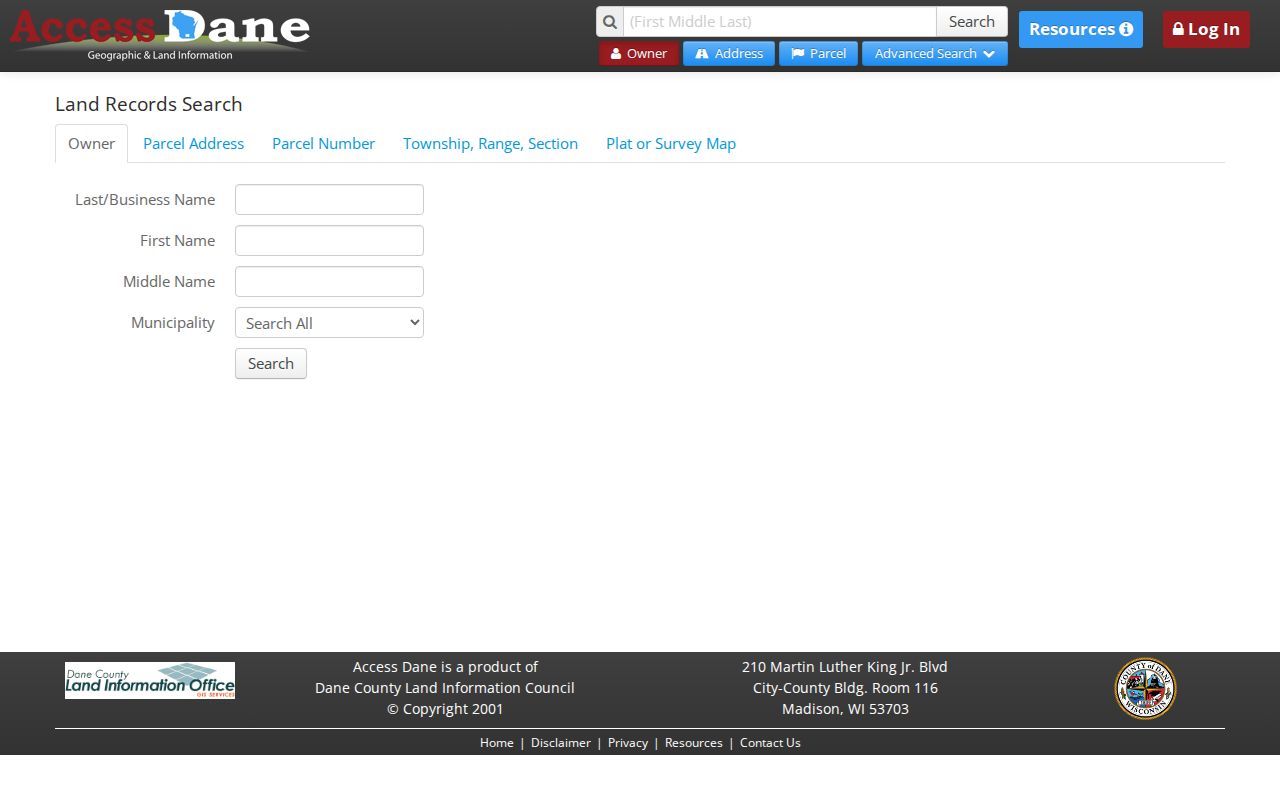
The search choices show why a legal or parcel key can recover a Middleton property when its present street label fails.
Walk Dane Deeds Backward
A chain of title is the linked series of recorded transfers for the same land. Start with the current tax owner, but accept a deed only when its legal description matches the parcel. The Tapestry instructions stress exact last-name spelling, allow a partial first name such as JAN, and advise against middle initials.
- Copy the current owner, PIN, and legal description from Access Dane.
- Find that owner's purchase deed and record its grantor, grantee, document number, date, and legal description.
- Search the seller as a former grantee to locate the earlier purchase.
- Repeat while the land description remains continuous. Note splits, CSMs, plats, and easements.
- At the January 1975 online boundary, contact the Register for counter, book, microfilm, or mail access.
- Grantor / grantee
- The party conveying an interest and the party receiving it.
- Chain of title
- The sequence of recorded transfers linked to the same land.
- Legal description
- The formal land description that can remain useful when a street address changes.
Tapestry costs $8.75 per search plus $1 per image page; failed searches are not charged. Counter copies require cash and identifying facts. Mail orders need the document reference, year, page count, money order, and stamped envelope. Uncertified copies are $2 for the first page and $1 for each added page, while certification adds $1 per document. The county advises allowing about two weeks for mail.
Cross Middleton's 1975 Index Line
The online date is an access boundary, not the start of Dane County land ownership. Long-term back-indexing continues, and older material may remain in books, microfilm, or staff-controlled files. The county also notes that older originals can be hard to read because a legibility rule did not exist until 1997. Light or blue ink may reproduce poorly.
Before contacting staff, gather the party names, legal description or address, approximate recording year, and any volume, page, or document number. Most records may be viewed at the office without charge. A focused request gives staff a better route than asking for everything about an address.
The county's search instructions are visible in the Tapestry reference.
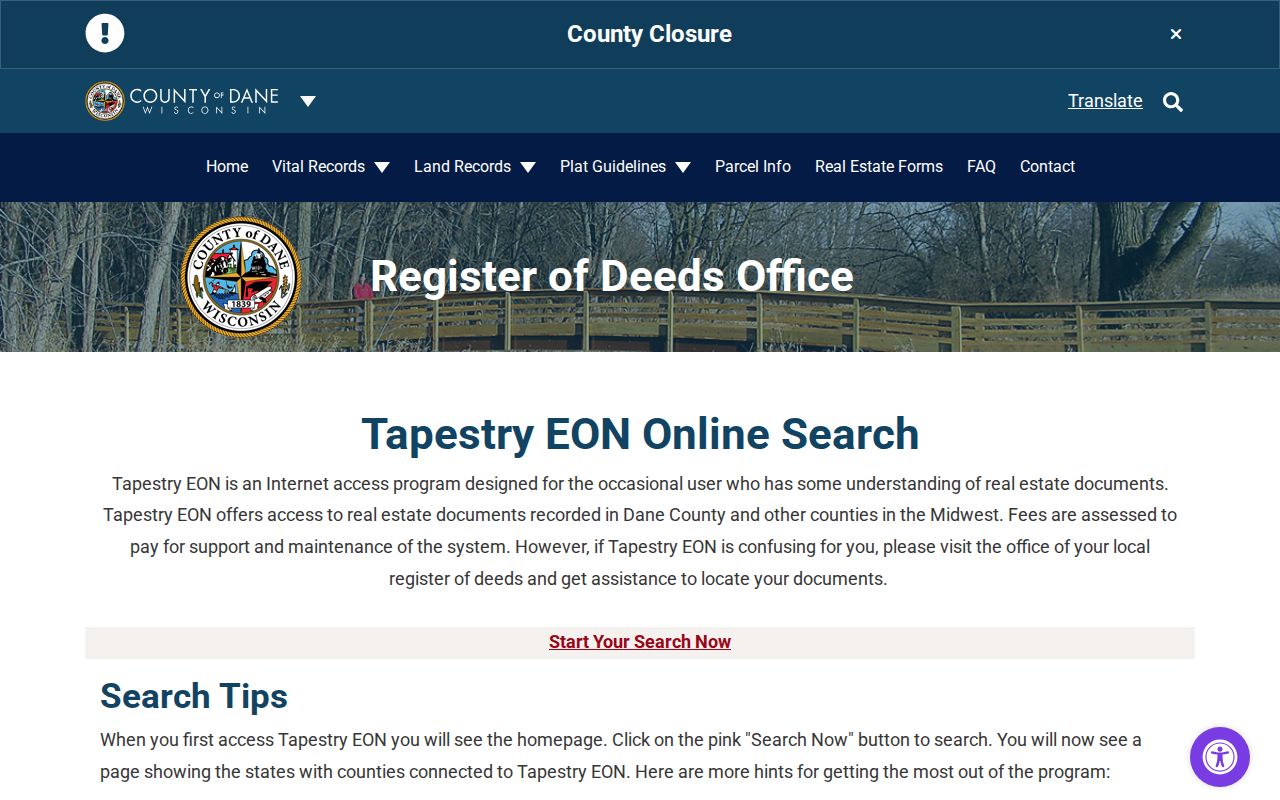
The captured guidance helps separate online search mechanics from the older-record fallback at the Register's office.
Pair Middleton Directories and Census
Directories and the census answer different questions. A directory can place a listed householder, spouse, occupation, business, or phone at an address in its publication year. Reverse volumes may begin with the street. A census schedule lists the household as recorded on one census date. Neither should be treated as continuous proof between dates.
- Choose a directory year that includes the right geographic scope, then record its title, publisher, page, and exact address entry.
- Find the nearest released census year and confirm the address, enumeration area, names, ages, and relationships shown.
- Check the next available directory on each side to test continuity, noting spelling or number changes.
- Compare the names with deeds, vital indexes, probate, or obituaries only when those records are relevant and lawfully accessible.
The National Archives releases census schedules under the 72-year rule, with 1950 currently the latest public census. Middleton-specific directory coverage is not assured in every Madison or Dane volume, so preserve “not found” only after checking that volume's geographic section.
Map Earlier Middleton Buildings
Wisconsin Historical Society reports Sanborn holdings for Middleton, though exact local sheet years were not exposed in the research. A Sanborn sheet can show footprint, stories, material, use, outbuildings, and fire-risk details. Plats and CSMs explain lot creation and splits. DCiMap aerials bring the physical trail closer to the present. Each map must be cited by title, sheet, scale, and date.
Pictures and oral history add context, not title. Recollection Wisconsin and the Middleton Area Historical Society preserve photos, postcards, menus, negatives, and other local objects. A caption may suggest a use or person, but a deed, directory, or census must carry the formal claim.
A Middleton House-History Model
The Stamm House digital item offers a useful model. Its metadata identifies “Stamm House - Middleton, Wis.,” gives an approximate 1925 date and the address 6625 Century Avenue, and describes building phases from 1847 to 1858 plus later hotel, tavern, post-office, dancehall, and restaurant uses. Those are collection facts, not a complete owner or occupant chain.
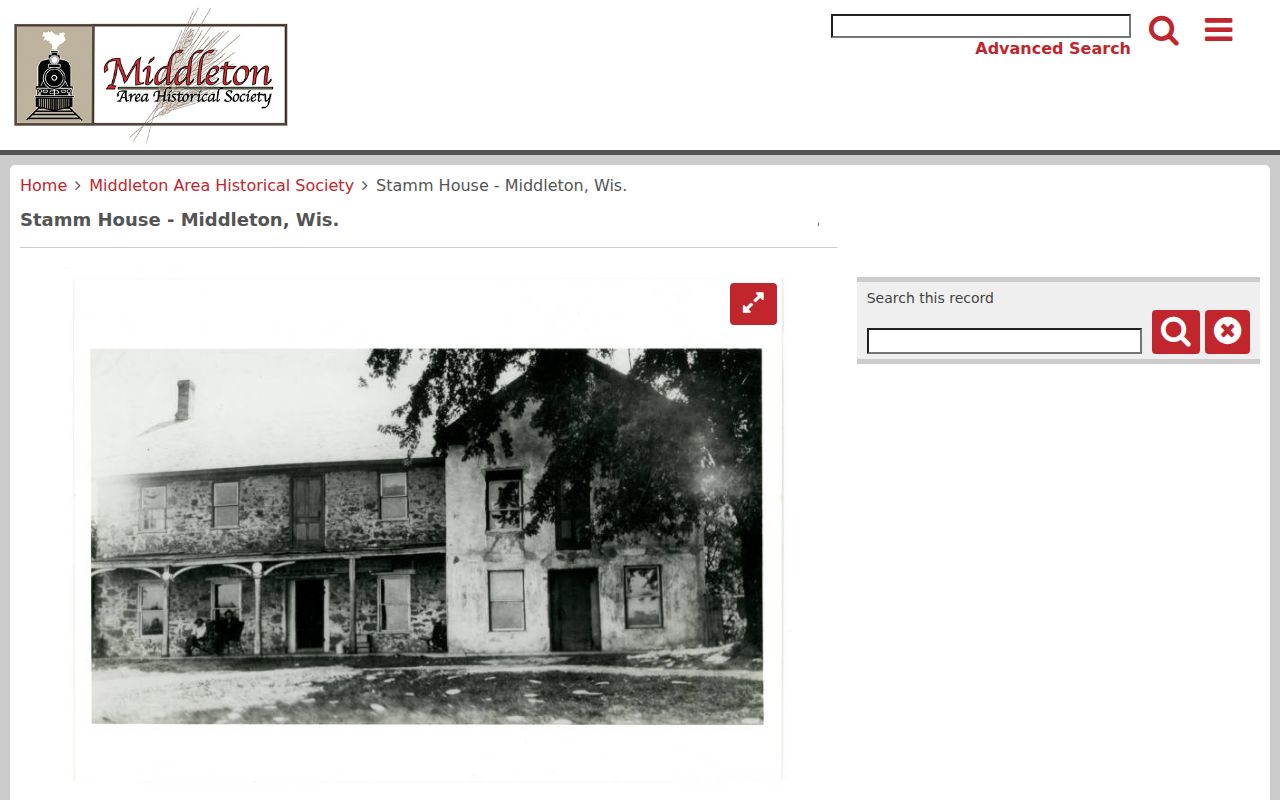
The item record shows how title, date, identifier, description, place, rights, and file metadata can be saved before claims are checked against parcels, deeds, directories, maps, and permits.
Middleton's Peatsville nickname and 1856 railroad arrival offer broader context for older land, but they cannot establish that one lot had a given use. House history moves from local story to parcel-level proof.
Ask Middleton History Custodians
Rowley House Museum preserves local photographs, artifacts, buildings, and community memory. Its published season is generally Tuesday afternoons and Saturday mornings from mid-April to mid-October, but hours should be confirmed. Middleton Public Library provides reference help. Dane County Historical Society's Otto Schroeder Archives takes appointments and may charge for staff copies.
The Wisconsin Historical Society offers pre-1907 vital indexes and map collections. UW Digital Collections carries Madison and Dane-area directories. When asking for help, give the address, parcel or legal description, surname variants, and date range. Request collection, box, folder, item, reel, page, and rights information so another researcher can verify the find.
Note: A repository catalog may index only part of a collection, so staff help can reveal material that a web search misses.
Support Middleton Previous Residents
Owners are only one part of house history. Reverse directories and census schedules may identify past residents who did not own the parcel. The collection runs and ways to read an entry belong on the Middleton city directories page. Here, each entry serves the dated trail for one address.
An obituary can supply a dated notice and family links, while a probate file may explain a transfer after death. Exact local obituary coverage was not verified, so begin with library reference staff and Wisconsin Historical Society newspaper holdings. Then check names and relationships against vital, probate, and deed evidence. Vital certificates have eligibility limits under Wisconsin law; an index is not the certificate itself.
Write “previous resident” only when an address-based source supports occupancy for a stated period. Otherwise use the narrower role: owner, grantee, permit applicant, relative, or person named in a photograph caption.
Lawful use. Research previous residents for house history, family history, or personal curiosity. Do not expose protected addresses or use findings to track, harass, threaten, or harm a living person.